
OpenLoops.02
bubbles, multiple dimensions, technological ecology, paid open calls, how to price your work, and focus tunes

#tunnelstates
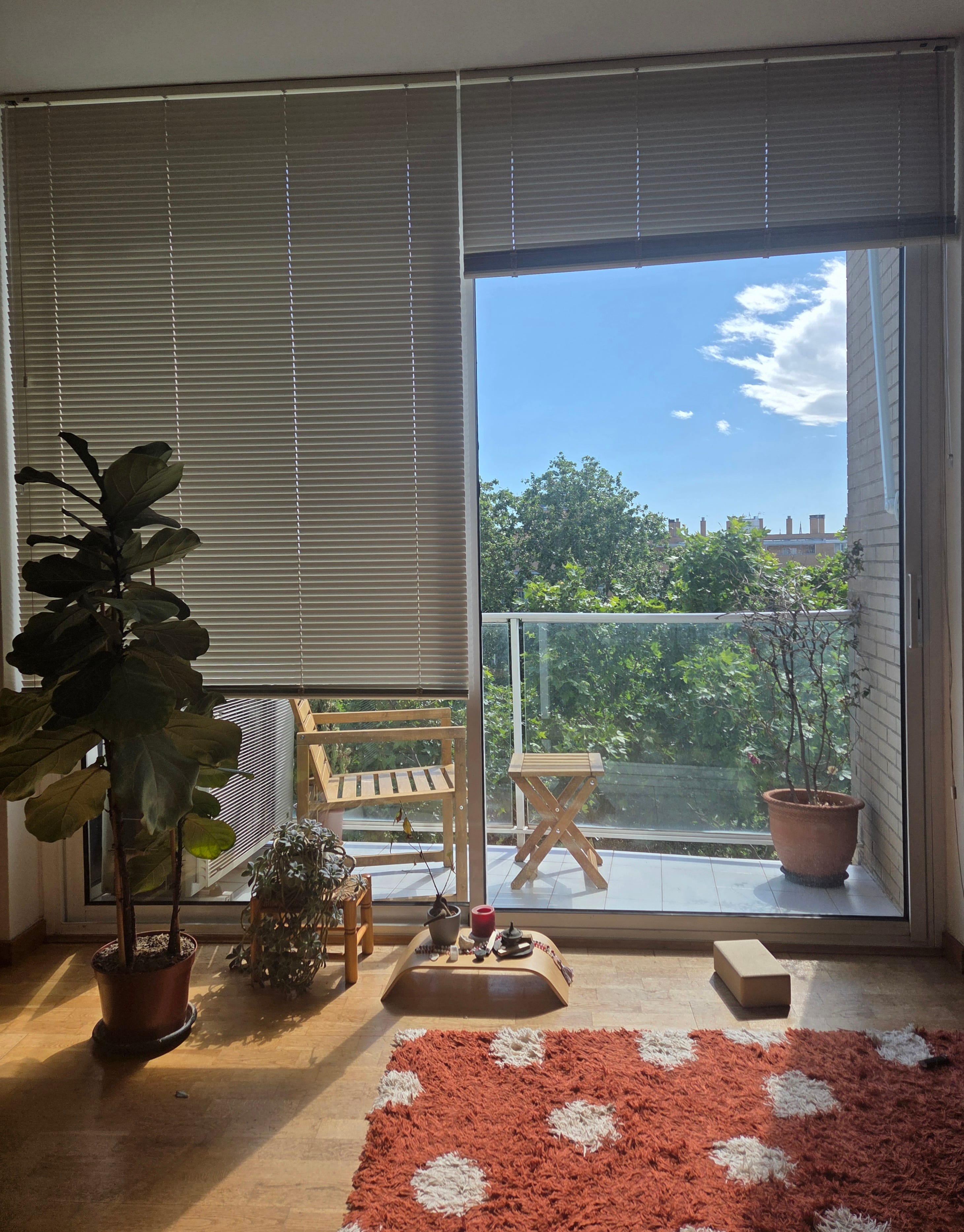
It's been so beautiful and sunny and warm in Barcelona lately. Meanwhile, I spent this week in a cave. The city is in its annual short-but-sweet spot right now, between the cold humidity of winter — the kind that crawls into your bones and never leaves — and the sweltering summer months that have temperatures climbing so high people call this place as Mt. Sauron once June rolls in.1

My studio is on the 6th floor and sits on the side of the building that gets hit with sun pretty much all day. Even now, as we’re comfortably nestled in the city’s oh so brief but perfect balance of warmth and chill, it gets really hot in there. Sauna style. The only way to beat the heat is to close the persianas, those screechy metal blinds that reflect the sun back on itself.
There I sat for most of the week, surrounded by an array of emotional support bevvies2, the click-clacking of my mechanical keyboard and two of my current favourite focus playlists blasting on loop. Just me in my little metal encased oven of an enclave tending to the many last minute adjustments that always pop up in the days leading to a show opening.
Did I mention my neighbours are renovating?
#latentstates
There truly are few things that I enjoy more than being alone with my thoughts. Days where I’m able to freely bounce around between them all, uninterrupted. Dots begin to connect, ideas appear, inspiration blooms.
On days and weeks when projects are in the feedback and testing phases, I miss all that uninterrupted space. I used to think it was uninterrupted time I was running after. But lately it feels a lot more spatial.
Is my brain basically an LLM? Is my soul just a vector floating around the Latent Space of my mind, traversing its many dimensions as it produces a clearer and clearer picture over time? Someone once explained to me that LLMs move through 75 dimensions to generate a clear output. I remember being impressed by this number at the time, finding it hard to fathom. In fact the minimum is actually somewhere between 300–1,500 raw dimensions. Meanwhile Meta’s Llama model apparently uses 4,096-dimensional space. Mind boggling to say the least.
The only other analogy I’ve held around where my thoughts go when I loose track of them has had to do with bubbles. Which makes everything feel very fragile, doesn’t it. As much as I love bubbles, (truly I’m a bit obsessed,) and as much as I enjoy being in my own bubble, I’m easily devastated when distraction, work, life,... causes said bubble to pop.
If my brain is indeed like an LLM, then in fact, all that space does is shrink. It gets narrower. Different prompts activate different zones within the 4K+ hypothetical dimensions. A more specific prompt constrains the model to a tighter area. A more open ended one lets it move through larger swaths of space, which leads to more connections and a higher chance of surprising ones3 occuring.
I remember a time when everyone proudly compared themselves to machines. “Your brain is like a hard drive” “I wish I could ctrl+z my life,” etc, etc. Now everyone is trying to define what differentiates us from computers, and prove what fundamentally separates the natural world from the bits and bytes.
As if computers aren’t made from rocks4.
Generally models process prompts internally based on information they’ve been trained on. This creates patterns and accumulated knowledge, also known as weights, and they are pretty fixed. Unless a model is retrained, the knowledge base stays the same. A snapshot, frozen in time.
On the other hand, us humans experience new things all the time which means that our knowledge base is changing all the time. Our weights aren’t fixed. Not only am I a little vector moving through space, space itself is constantly changing and adjusting to my will or whimsy. When I’m in a production tunnel, I have to actively restrain that part of myself, hold my weights in what feels like a unnatural fixed state.
#loosethreads
Quote
“Systems of intelligent, computational ability – mycorrhizal networks, slime moulds and ant colonies, to name a few – have always existed in the natural world, but we had to recreate them in our labs and workshops before we were capable of recognizing them elsewhere. This is technological ecology in practice. We need the mental models provided by our technology, the words we make up for its concepts and metaphors, in order to describe and properly understand that analogous processes are already at play in the more-than-human world.” — James Bridle | Ways of Being
Things
The Grant Desk offers a regularly updated and human hand-picked selection of paid open calls, fellowships, and residencies for artists, writers, researchers and creative technologists, covering all the regions of the world. The resource we’ve all been dreaming of!
Function Store aka Dan Molnar is working on another resource (he has very generously given us many already) that could turn into something truly amazing if we all (anonymously) chip in. If you’ve ever had trouble pricing your services or time for professional projects and didn’t know who to ask or where to look for answers, this database hopes to help with that.
The new Blue Sun x André 3000 came out in 2023, but for some reason I have only just started to vibe with. It’s one of the two focus friendly playlists I was talking about earlier.
The second one is an album by Tokyo Chill Lab and is such a vibe. For a winter themed album it has a particularly summery feel.
all em-dashes and en-dashes used in this piece of writing were consciously typed by this millenial author.
Current favourites: hibiscus tea, bubbly water, still water and coffee with my new obsession, home made cashew milk.
This is obviously a very general breakdown of something pretty technical, so don’t come for me if I’m not being 100% factually accurate rn.
Again, a gross simplification. But also not incorrect!